Buy express24.eu ?
We are moving the project
express24.eu .
Are you interested in purchasing the domain
express24.eu ?
domain@kv-gmbh.de · 0541-91531010
Buy express24.eu ?
What is a resultant wave in physics?
In physics, a resultant wave is the combination of two or more individual waves that are superimposed on each other. When waves with different amplitudes, frequencies, or phases overlap, they create a new wave pattern known as the resultant wave. The properties of the resultant wave, such as its amplitude, frequency, and phase, are determined by the properties of the individual waves that combine to form it. Resultant waves are important in understanding phenomena such as interference, diffraction, and standing waves. **
What is the resultant of a triangular load?
The resultant of a triangular load is the single force that can replace the distributed load while producing the same effect on the structure. It is the equivalent concentrated force that acts at a specific point on the structure. The magnitude and direction of the resultant force depend on the shape and intensity of the triangular load. Calculating the resultant force is important in structural analysis to simplify the analysis of complex loads. **


Similar search terms for Resultant
Top-Angebote
Products related to Resultant:
-
HQ Speedy BOSH! Book – Quick Easy Plant-Based Recipe CollectionDelicious Easy Vegan Meals, 30 Minute Vegan Recipes Book, Speedy BOSH - 30 Minutes Plant Based Meals - Henry Firth, Ian Theasby BOSH! are back with over 100 mouthwatering plant-based dishes you can get on the table in 30 minutes or less. The fourth cookery book from Sunday Times No.1 bestselling authors Henry and Ian, aka ‘the vegan Jamie Olivers’, packed with outrageously tasty, super speedy dishes made without meat, eggs or dairy, perfect for weeknight dinners after a long day, fast breakfasts to supercharge the family, or Sunday meal prep for the week ahead. In just 30 minutes flat, you’ll be creating fragrant curries, hearty stews, comfort food for cold nights (just have a taste of the Ultimate Vegan Mac and Cheese!), indulgent puds, delicious rice and noodle dishes, and one-pan wonders. No fancy kit, no out-there ingredients. You’ll be able to get all the bits and pieces you need from your nearest major supermarket. Everything has been tried and tested and is bursting with flavour. Let vegan food never be called bland, because – honestly? – this might just be their tastiest collection of recipes yet as well as their quickest. tags;speedy bosh3,50 £*Shipping: 1,99 £Secure redirect to the provider
-
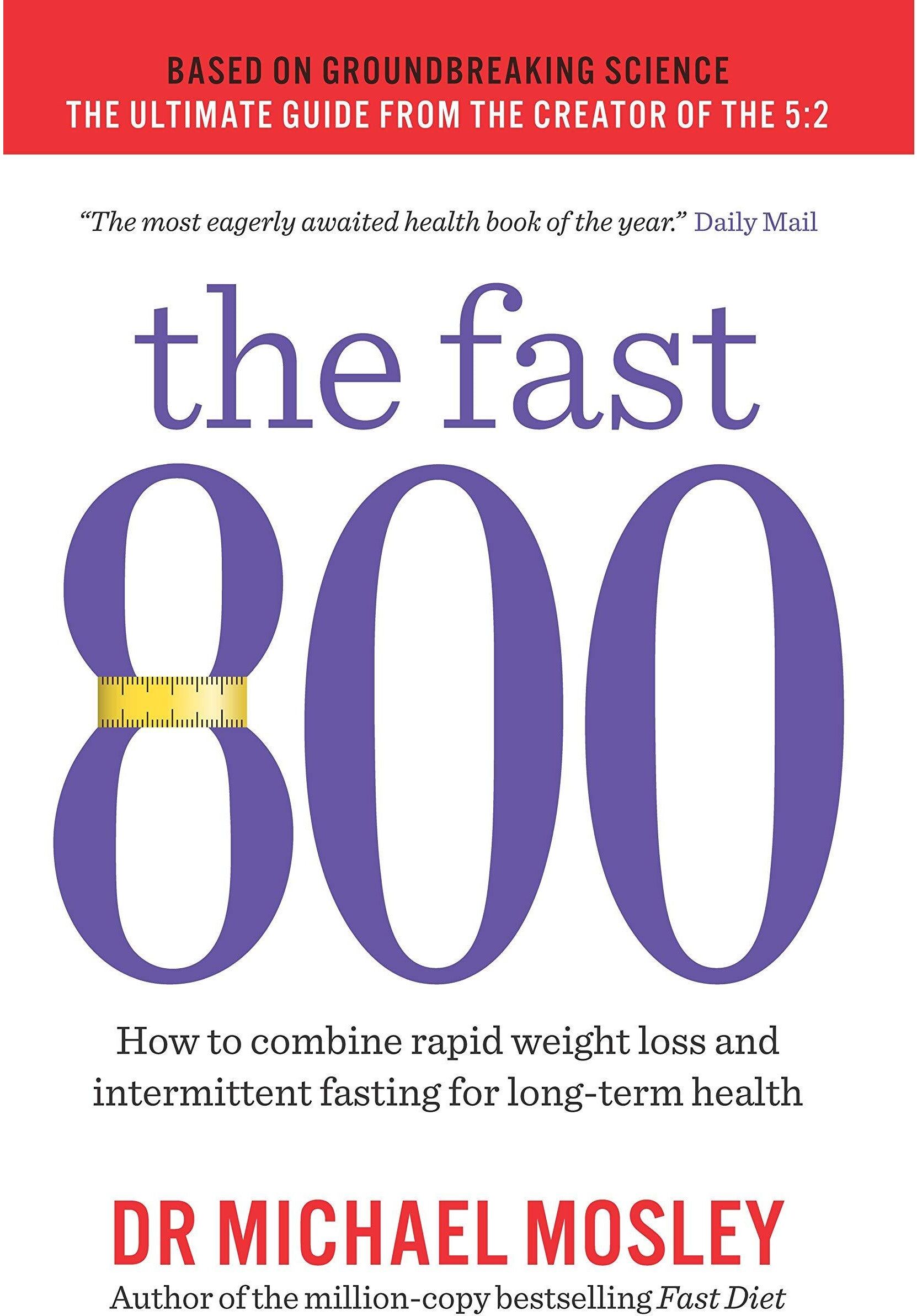
SHORT BOOKS LTD The Fast 800 by Michael Mosley – Rapid Weight Loss & Intermittent Fasting PlanThe Fast 800 Recent studies have shown that 800 calories is the magic number when it comes to successful dieting - it's an amount high enough to be manageable but low enough to speed weight loss and trigger a range of desirable metabolic changes. The secret of this new programme is that it is highly flexible - depending on your goals, you can choose how intensively you want to do it. Along with delicious, low-carb, Mediterranean-style recipes and menu plans by Dr Clare Bailey, The Fast 800 offers an effective way to help you lose weight, improve mood and reduce blood pressure, inflammation and blood sugars. Take your future health into your own hands.4,69 £*Shipping: 1,99 £Secure redirect to the provider
-
Uplift Essentials Quick Nail Gel Polish Remover Fast, Easy And Damage Free Manicure Removal (15ml) Quick Nail Gel Polish Remover Fast, Easy And Damage Free Manicure Removal (15ml)Say goodbye to tedious soaking and harsh scrubbing with this Quick Nail Gel Polish Remover. Designed to dissolve gel polish in just 23 minutes, it makes manicure removal effortless and gentle. Simply apply, wait, and wipe no foil, no wrapping, and...37,97 $*Shipping: 0,00 $Secure redirect to the provider
-
Friendly Fresh Finds Portable Air Pump For Air Beds, Mattresses, And Camping Gear Compact, Efficient, And Quick Inflation Tool Portable Air Pump For Air Beds, Mattresses, And Camping Gear Compact, Efficient, And Quick Inflation ToolInflating air beds, mats, and other camping gear just got easier! This portable air pump is the ultimate solution for fast and efficient inflation, making it ideal for home, outdoor adventures, and travel. Its compact design ensures its always at...99,97 $*Shipping: 0,00 $Secure redirect to the provider



-
What is the angle when two forces form a resultant?
When two forces form a resultant, the angle between the two forces can be found using the law of cosines. The angle can be calculated using the formula: cos(θ) = (F1^2 + F2^2 - R^2) / (2 * F1 * F2), where F1 and F2 are the magnitudes of the two forces and R is the magnitude of the resultant force. This angle represents the direction of the resultant force in relation to the original forces. **
-
What formula do I use to calculate the resultant force?
To calculate the resultant force, you can use the formula: Resultant force = √(Fx^2 + Fy^2) Where Fx is the force in the x-direction and Fy is the force in the y-direction. This formula is derived from the Pythagorean theorem, which states that the magnitude of the resultant force is equal to the square root of the sum of the squares of the individual forces in each direction. **
-
What is the resultant vector with two lengths and angles?
The resultant vector with two lengths and angles is the single vector that represents the combined effect of the two original vectors. To find the resultant vector, we use the parallelogram law of vector addition, which involves adding the two vectors tip to tail and then drawing the diagonal of the parallelogram formed. The length and angle of the resultant vector can be calculated using trigonometric functions such as sine and cosine. This resultant vector represents the combined effect of the original vectors in terms of both magnitude and direction. **
-
What is the graphical resultant force of more than 3 forces?
The graphical resultant force of more than 3 forces is found by using the polygon method. This method involves drawing the forces as vectors with their tails at the same point, and then completing the polygon by drawing the final side from the head of the last vector to the tail of the first vector. The resultant force is then the vector that closes the polygon. This method allows us to find the magnitude and direction of the resultant force by using vector addition. **


How do you calculate the resultant force without using the cosine law?
To calculate the resultant force without using the cosine law, you can use the Pythagorean theorem. First, you would calculate the horizontal and vertical components of the forces. Then, you would use the Pythagorean theorem to find the magnitude of the resultant force by taking the square root of the sum of the squares of the horizontal and vertical components. Finally, you can use trigonometric functions to find the direction of the resultant force. **
How do you calculate the resultant forces F1 and F2 in Newtons in physics?
To calculate the resultant forces F1 and F2 in Newtons in physics, you need to first determine the individual forces acting on an object. Once you have identified these forces, you can use vector addition to find the resultant force. This involves adding the forces together taking into account their direction and magnitude. The resultant force F1 and F2 can be calculated using the formula F = F1 + F2, where F is the resultant force. **
Top-Angebote
Products related to Resultant:
-
Avon Ultra Colour 60 Second Express quick-drying nail polish shade Think Fast Pink 10 mlAvon Ultra Colour 60 Second Express, 10 ml, Nails for Women, A gorgeous manicure as though you’d just left the nail salon? The Avon Ultra Colour 60 Second Express nail polish lets you achieve it in the comfort of your own home. It coats the surface of the nail with a continuous layer of long-lasting, intense colour with a glossy finish, helping to give your nails a manicured, perfectly groomed look. You can use it to accentuate your nails or perhaps to enhance your outfit and style. So which colour will you choose to make your nails pop? Characteristics: bright, rich colour easy to apply long-lasting How to use: Apply the polish using a brush for polish-free, degreased nails. For best results, apply two layers.3,96 £*Shipping: 3,99 £Secure redirect to the provider
-
HQ Speedy BOSH! Book – Quick Easy Plant-Based Recipe CollectionDelicious Easy Vegan Meals, 30 Minute Vegan Recipes Book, Speedy BOSH - 30 Minutes Plant Based Meals - Henry Firth, Ian Theasby BOSH! are back with over 100 mouthwatering plant-based dishes you can get on the table in 30 minutes or less. The fourth cookery book from Sunday Times No.1 bestselling authors Henry and Ian, aka ‘the vegan Jamie Olivers’, packed with outrageously tasty, super speedy dishes made without meat, eggs or dairy, perfect for weeknight dinners after a long day, fast breakfasts to supercharge the family, or Sunday meal prep for the week ahead. In just 30 minutes flat, you’ll be creating fragrant curries, hearty stews, comfort food for cold nights (just have a taste of the Ultimate Vegan Mac and Cheese!), indulgent puds, delicious rice and noodle dishes, and one-pan wonders. No fancy kit, no out-there ingredients. You’ll be able to get all the bits and pieces you need from your nearest major supermarket. Everything has been tried and tested and is bursting with flavour. Let vegan food never be called bland, because – honestly? – this might just be their tastiest collection of recipes yet as well as their quickest. tags;speedy bosh3,50 £*Shipping: 1,99 £Secure redirect to the provider
-
SHORT BOOKS LTD The Fast 800 by Michael Mosley – Rapid Weight Loss & Intermittent Fasting PlanThe Fast 800 Recent studies have shown that 800 calories is the magic number when it comes to successful dieting - it's an amount high enough to be manageable but low enough to speed weight loss and trigger a range of desirable metabolic changes. The secret of this new programme is that it is highly flexible - depending on your goals, you can choose how intensively you want to do it. Along with delicious, low-carb, Mediterranean-style recipes and menu plans by Dr Clare Bailey, The Fast 800 offers an effective way to help you lose weight, improve mood and reduce blood pressure, inflammation and blood sugars. Take your future health into your own hands.4,69 £*Shipping: 1,99 £Secure redirect to the provider
-
What is a resultant wave in physics?
In physics, a resultant wave is the combination of two or more individual waves that are superimposed on each other. When waves with different amplitudes, frequencies, or phases overlap, they create a new wave pattern known as the resultant wave. The properties of the resultant wave, such as its amplitude, frequency, and phase, are determined by the properties of the individual waves that combine to form it. Resultant waves are important in understanding phenomena such as interference, diffraction, and standing waves. **
-
What is the resultant of a triangular load?
The resultant of a triangular load is the single force that can replace the distributed load while producing the same effect on the structure. It is the equivalent concentrated force that acts at a specific point on the structure. The magnitude and direction of the resultant force depend on the shape and intensity of the triangular load. Calculating the resultant force is important in structural analysis to simplify the analysis of complex loads. **
-
What is the angle when two forces form a resultant?
When two forces form a resultant, the angle between the two forces can be found using the law of cosines. The angle can be calculated using the formula: cos(θ) = (F1^2 + F2^2 - R^2) / (2 * F1 * F2), where F1 and F2 are the magnitudes of the two forces and R is the magnitude of the resultant force. This angle represents the direction of the resultant force in relation to the original forces. **
-
What formula do I use to calculate the resultant force?
To calculate the resultant force, you can use the formula: Resultant force = √(Fx^2 + Fy^2) Where Fx is the force in the x-direction and Fy is the force in the y-direction. This formula is derived from the Pythagorean theorem, which states that the magnitude of the resultant force is equal to the square root of the sum of the squares of the individual forces in each direction. **
Similar search terms for Resultant
-
Uplift Essentials Quick Nail Gel Polish Remover Fast, Easy And Damage Free Manicure Removal (15ml) Quick Nail Gel Polish Remover Fast, Easy And Damage Free Manicure Removal (15ml)Say goodbye to tedious soaking and harsh scrubbing with this Quick Nail Gel Polish Remover. Designed to dissolve gel polish in just 23 minutes, it makes manicure removal effortless and gentle. Simply apply, wait, and wipe no foil, no wrapping, and...37,97 $*Shipping: 0,00 $Secure redirect to the provider
-
Friendly Fresh Finds Portable Air Pump For Air Beds, Mattresses, And Camping Gear Compact, Efficient, And Quick Inflation Tool Portable Air Pump For Air Beds, Mattresses, And Camping Gear Compact, Efficient, And Quick Inflation ToolInflating air beds, mats, and other camping gear just got easier! This portable air pump is the ultimate solution for fast and efficient inflation, making it ideal for home, outdoor adventures, and travel. Its compact design ensures its always at...99,97 $*Shipping: 0,00 $Secure redirect to the provider
-
What is the resultant vector with two lengths and angles?
The resultant vector with two lengths and angles is the single vector that represents the combined effect of the two original vectors. To find the resultant vector, we use the parallelogram law of vector addition, which involves adding the two vectors tip to tail and then drawing the diagonal of the parallelogram formed. The length and angle of the resultant vector can be calculated using trigonometric functions such as sine and cosine. This resultant vector represents the combined effect of the original vectors in terms of both magnitude and direction. **
-
What is the graphical resultant force of more than 3 forces?
The graphical resultant force of more than 3 forces is found by using the polygon method. This method involves drawing the forces as vectors with their tails at the same point, and then completing the polygon by drawing the final side from the head of the last vector to the tail of the first vector. The resultant force is then the vector that closes the polygon. This method allows us to find the magnitude and direction of the resultant force by using vector addition. **
-
How do you calculate the resultant force without using the cosine law?
To calculate the resultant force without using the cosine law, you can use the Pythagorean theorem. First, you would calculate the horizontal and vertical components of the forces. Then, you would use the Pythagorean theorem to find the magnitude of the resultant force by taking the square root of the sum of the squares of the horizontal and vertical components. Finally, you can use trigonometric functions to find the direction of the resultant force. **
-
How do you calculate the resultant forces F1 and F2 in Newtons in physics?
To calculate the resultant forces F1 and F2 in Newtons in physics, you need to first determine the individual forces acting on an object. Once you have identified these forces, you can use vector addition to find the resultant force. This involves adding the forces together taking into account their direction and magnitude. The resultant force F1 and F2 can be calculated using the formula F = F1 + F2, where F is the resultant force. **
* All prices are inclusive of VAT and, if applicable, plus shipping costs. The offer information is based on the details provided by the respective shop and is updated through automated processes. Real-time updates do not occur, so deviations can occur in individual cases. ** Note: Parts of this content were created by AI.